
Best Tech Stack for Startups in 2026: A Practical Guide Before You Build
How founders should choose a startup tech stack for SaaS, MVPs, AI products, dashboards, and scalable web applications.
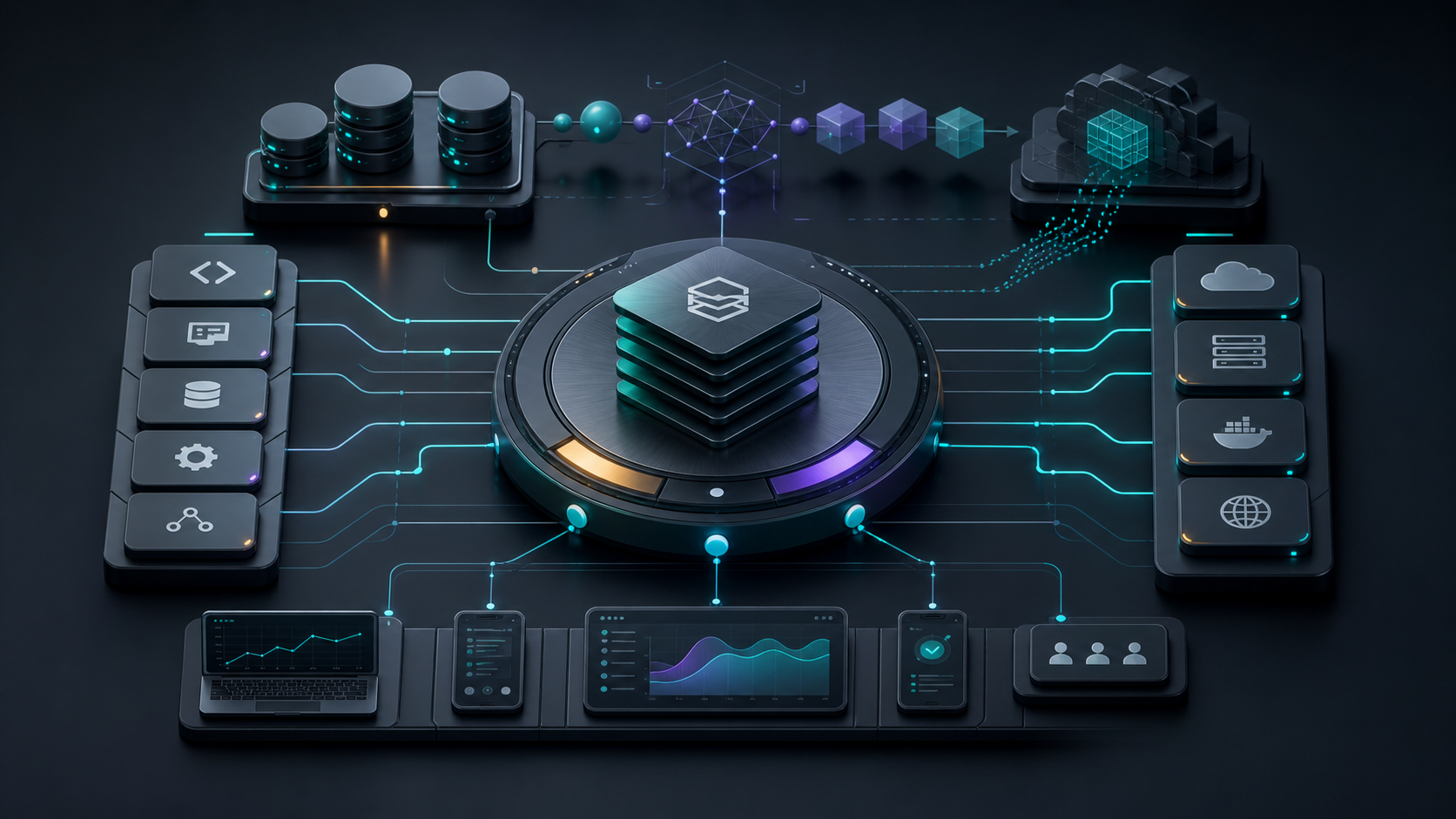
The best startup tech stack is not the trendiest one. It is the one that helps you launch, learn, hire, maintain, and scale without trapping the business in avoidable complexity.
For most startups, technology should support speed and clarity. The stack should make product development easier, not become the product itself.
Start with product type
A SaaS dashboard, AI automation tool, ecommerce platform, mobile app, and internal business system have different needs.
Before choosing tools, answer:
- Is this a public website, private app, or both?
- Does it need real-time updates?
- Will users pay online?
- Does it need mobile apps?
- Is SEO important?
- How much admin control is needed?
- What integrations are required?
The answers matter more than social media opinions about frameworks.
A strong web stack for many startups
For many modern SaaS and MVP builds, a reliable stack might include:
- Next.js for web app and SEO-friendly pages.
- TypeScript for safer development.
- PostgreSQL or MongoDB depending on the data model.
- Stripe or Paddle for billing.
- A transactional email provider.
- Cloud hosting with preview deployments.
- Error tracking and analytics.
This kind of stack is popular because it balances speed, flexibility, and maintainability.
When to use Supabase or Firebase
Supabase and Firebase can help startups move fast by providing authentication, database tools, storage, and realtime features.
They are useful when:
- You need fast MVP development.
- The team is small.
- You want built-in auth and database tooling.
- The product does not need highly custom infrastructure at first.
The tradeoff is that you still need good architecture. Backend-as-a-service tools do not remove the need for clean permissions, data modeling, and deployment discipline.
When AI changes the stack
AI products often need more than an API call to a model. They may need document ingestion, embeddings, vector search, queue workers, prompt management, evaluation, and human review workflows.
If your startup depends on AI, plan for:
- Secure data handling.
- Clear source documents.
- Cost monitoring.
- Response quality checks.
- Fallback behavior.
- Logs for debugging.
AI features should be treated like product systems, not magic text boxes.
Do not overbuild infrastructure
Some startups choose complex infrastructure before they have users. Kubernetes, microservices, event buses, and heavy cloud architecture can be useful at scale, but they can slow down early product learning.
At the MVP stage, simple deployment and clean code usually beat impressive infrastructure.
Choose tools developers can actually maintain
A stack is only good if people can work with it. Think about hiring, documentation, community, library support, and long-term maintenance.
Good questions:
- Can another developer understand this project quickly?
- Are the dependencies stable?
- Is the hosting setup easy to repeat?
- Are migrations and environment variables documented?
- Can we test important workflows?
Maintainability is a growth advantage.
The Palentrix recommendation
For startups, we usually recommend choosing a proven stack that supports the first two years of product growth. Build the MVP with clean boundaries, measure usage, and evolve the architecture when the business has evidence.
The best stack is the one that lets you ship confidently, learn from users, and keep improving without rebuilding from zero.